
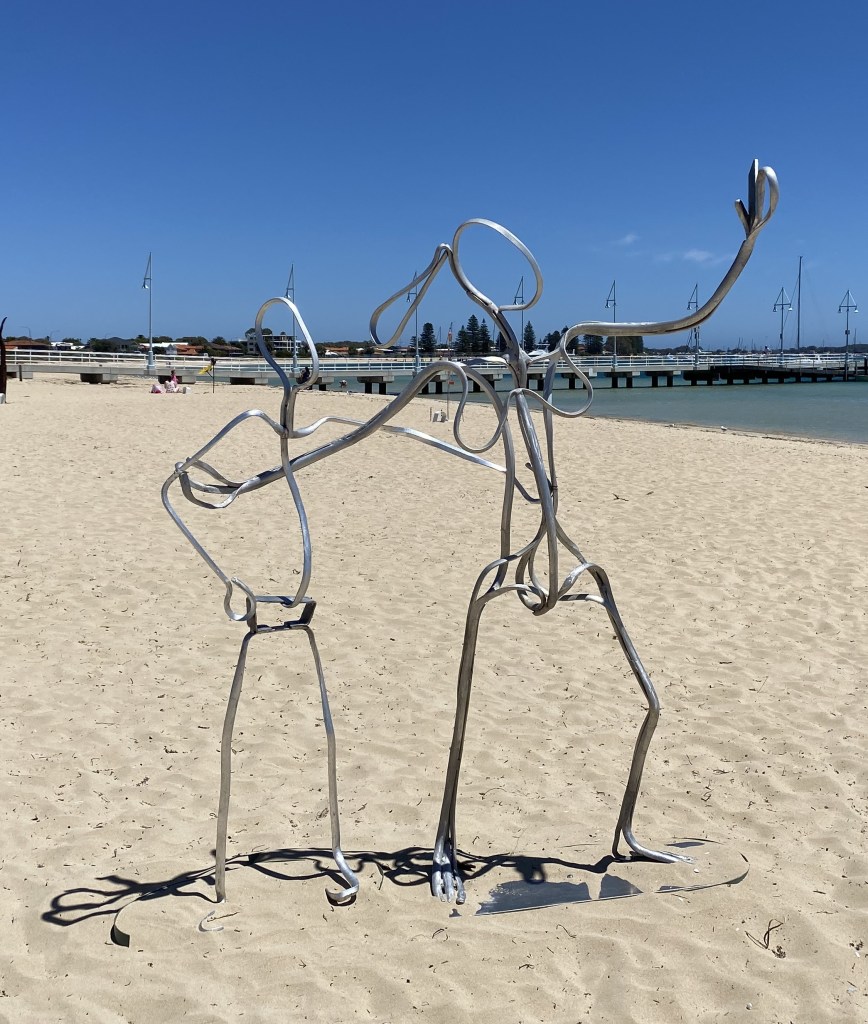
The following is the ‘Structural Story’ of the ‘lived experience of co-facilitation’. It is the combined story of the co-facilitators in my research and is the most fun (and least academic) of all the chapters.
I continue to be grateful for all I learned!
Co-facilitation is full of possibilities. Co-facilitators enter into the co-facilitation experience optimistically, hopefully and expectantly, wanting this co-facilitator to be the right person in the right place at the right time. This is an opportunity to “make a difference”, “to reach a vision”. They are there to “represent each other and the profession”, to “take a creative place in the community”. Every relationship is a possible recommendation, a lead to new contacts, an opportunity to build individual and collective reputations. Co-facilitators “commit to something long-term”, to something “enriching and worthwhile”.
Co-facilitators look for, and express, “good intentions, “passion and commitment” and their “willingness to make it work”, but gently because energy, excitement and involvement can be intimidating. They are “equal but not the same”.
There is some apprehension, too. There is no model for the co-facilitation experience, no one right way to co-facilitate; all they can do is respond to individuals, the group and each other. Every experience is unique.
Past successes and challenges hover at the edge of memory, influencing or encroaching on the present. This co-facilitator may be a “kindred soul” or a “ball and chain”. It is easy to work at cross-purposes, to take over, to become involved in the moment and forget the co-facilitator, to lose contact with the “conscious subjectivity” that exists in the spaces between the facilitators and the group.
There is “nothing to go on but integrity”. Co-facilitators “pull from trust”, trying to act predictably, communicate honestly and demonstrate competence, “instinctively trying to gel with each other”.
Time feels suspended as the co-facilitators try to convey openness not arrogance, to be confirming not intimidating or intimidated, to express tolerance not intolerance. They clarify who they are, how they are and how they will be with the group. Co-facilitators are “interrelatedly autonomous” relying “ on the space between them”. They try to be “open to new ideas, open to advice, to challenges, to people’s suggestions and not give the impression that they have all the answers”.
Yet trust needs to be well founded. Co-facilitators prepare for the unexpected. Clear and “robust guidelines, structures and processes” reduce the ambiguity of the co-facilitation experience and create a feeling of safety. “Walking the talk” demonstrates that they are “working on the same page”.
Co-facilitators stay focussed on the purpose of the work, the facilitation of the group session. Endeavouring to “act as one mind”, it is the individual knowledge, skills, experience and, personalities that are harnessed. Working toward a shared vision, in a shared space, using the knowledge that is distributed, they “complement each other, not duplicate each other” and “bring more to the table”.
Co-facilitators negotiate what will be done with the group and how it will be done, implicitly or explicitly developing ways of working together, delineating roles and responsibilities. They try to stop their “ego from jumping in and strutting around”. The focus is on the thinking and discussion in the group, rather than the amount of air time each facilitator has. “It can’t be a dominance all the time of one person. It has to be OK, what fits best? What feels best?”
“Narcissistic self-absorption, the temptation to attack, seduce or escape, becoming distressed or over anxious, obsessing over the relationship with the co-facilitator or a group participant” loom at the edge of the experience and need to be managed. The focus is, and must stay on the group. Attention is focussed out but from within. Self-confidence and self-reliance are required, “sufficient ego to live with the uncertainty, sufficient self-confidence to be grounded, a strong enough sense of self to be able to be direct and honest and sufficient personal drive and ego to be self-effacing”.
Flexibility is vital. Co-facilitation is unpredictable, “alive”. The unique strengths and talents of the co-facilitators and the group participants change plans. Co-facilitators improvise. They “listen with an intensive silence”, anticipate possibilities, “work into the future”, look for patterns, seek “feelings of tendency”, “keep their wits about them” and interpret behaviour and thinking. Their interpretations may be quite wrong, so they “check with each other if they sense that it’s time to veer off this plan and respond to what is going on in the group”, “take notice” of the responses and “seek patterns of reasoning and interaction”.
Unpredictability is also unsettling. Every change requires an immediate and unplanned response with opportunities for disagreement between the co-facilitators. It is easy to “jump in too soon” or “wait too long”. Co-facilitators watch and listen for a “signal to pull over”, “shifting the centre of the facilitation between them like in a Rolls Royce, so the group feels the change but doesn’t see it”. They try to contain themselves and to expand their perceptions so that they act “as one accord, being able to respond together”.
“It is the times when they act as a single mind that are closest to an epiphany”. In the co-facilitation experience, the co-facilitators “definitely feel enlarged, larger than life”. “There is enormous satisfaction in working as part of a team”. They share the workload, focussing on what needs to be done, not on who is supposed to do it. If one “drops something”, the other picks it up or prompts the other and reminds him/her of the intention of a process or technique. Co-facilitators are supportive not competitive. They may “compare themselves poorly to their stellar co-facilitator”, but they are better to “over-communicate, make shifts of possibility and learn from the experience of a skilled peer”. When they have integrated it all, it is “like flying”.
“Because it is a consultative process”, co-facilitators cannot approach facilitation “in the same controlling way”. Co-facilitators don’t just “do what they want, structure things to suit their own style, say anything they like or make things up”. The experience is not about “looking good in front of a group” or “using the experience to improve their self-esteem”. They “come in and out and around each other” trying to be conscious of the ways in which they step into discussions with the group or with individuals, the volume of the voice, the contrast of tone. Co-facilitators are “aware of where they are standing, how they are standing, who is going to do what, who is going to pick up things. When they are moving, they try to move unobtrusively, try to be still when the other one is talking”. They are dancing, “developing good connections, reciprocal movements and a nice rhythm”. It is easy to be “stuck to each other”, to be self-conscious, rather than “naturally reflective”. They do not want to be too “formalised or stylised” in the dance.
Positive co-facilitation experiences are seductive, exciting and inspiring. It is almost like falling in love. The relationship between co-facilitators can become the most important part of the experience, making it “more ‘co’ than ‘facilitative’”. They risk losing their sensitivity to making things approachable and transparent to the group, becoming “exclusive rather than inclusive”.
Inconsistencies arise, there are times when the processes are incoherent, incongruities occur. Competent facilitators with their own values, attitudes, personalities, knowledge, skills and experiences have disagreements. “To be human is to experience conflict”. Group sessions “have greater robustness and integrity when co-facilitators plan them together, use their individual strengths to analyse the broad issues, develop the conceptual framework for the sessions, select group processes and choreograph the sequence of exercises”. Points of disagreement are inevitable.
Anger, frustration, confusion, and upset happen. Co-facilitators are not “this neat little package. Sometimes they are disappointed in each other.” At the moment of the conflict, time stands still and the moment stretches. Self-control and reliability vie with volatility. It is hard to wonder at the uniqueness of individuals. When reason prevails, co-facilitators learn more about themselves, emotions improve listening. The work is constructive and differences are settled. It is uncomfortable but they have learned “how big the paddock is”, they have a place to stand as well as knowing “where the boundaries are”. When reason fails and “emotional landmines” are triggered, “the judgemental spook” materialises and the “messy emotional stuff about co-facilitation” erupts.
Talking helps. Planning, talking around the co-facilitation experience and reflecting on the experience are opportunities to “battle things out” and to “do things consciously to try to be able to work together closely”. Guidelines, structures and processes provide a “diaphragm” for holding co-facilitators and the group up, a system for managing conflicts. They “disagree agreeably” knowing that the relationship does not need to end just because they do not agree, and sometimes they behave in a “child-like way”.
The conflict shows that the co-facilitators care about themselves, each other and their relationship. It can help them to be clearer about what they individually and collectively think. Their co-facilitation relationship may be stronger. Or maybe their “skills are not good enough to find a more creative way through it”. Co-facilitators “aren’t joined at the hip” and it is “OK for the relationship to end”.
Co-facilitators try to prevent their differences from “bubbling up in front of the group”. They try to avoid “having a stoush in front of the participants”. Conflicts between co-facilitators in the context of the group process provide a model for the group. Responses and the lack of responses, what is said and done, not said and not done, are watched and monitored by participants, providing motivation for the co-facilitators to find a way to broach concerns, ask questions and listen carefully for responses.
Each action both constrains and enables the next. Communication is heard as well as shared. When feedback is nourishing it is “anchoring, affirming and nurturing”. It is easier to be relaxed and open, hear everything that is said and be sensitive to the small remarks. Thoughts, beliefs and feelings are easier to identify and articulate. Strengths and weaknesses, motivations and purposes feel clearer. There is a real sense of achievement.
Co-facilitators learn from ‘mistakes’, seeing them as events that uncover the preconceptions and choices of the co-facilitator. “A learning focus” makes the uncertainties less scary, the “sharing of pains, joys and very personal experiences” more precious, encounters “disarming and unthreatening”. Confidence grows that whatever happens, they will learn from it and learn together. It is “magnetic” pulling them into the co-facilitation experience, “pepping them up, brightening and lifting them”. Together, it is safe to try out new ideas, experiment with ways of working and investigate new behaviours. Together, co-facilitators grow and learn.
There are “luminous moments” which transcend the co-facilitation experience and flow into the daily lives of the facilitators. Co-facilitators are the “vehicles” helping group participants and each other to access the “enormous energy” inspired by the group process, to be “nourished, invigorated, affirmed and challenged” and to “make possible the journey”.
It can be hard to be open to learning when co-facilitators are at a “learning edge”, pushed to the limit and challenged to go further. Resistance, fragility, anxiety and resentment can override optimism. Perceptive, supportive challenge can restructure thinking and reignite an excitement about the possibilities. These are moments of ‘aha’! or “wow!’ What an insight or what a piece of gold has been made out of tin”.
The combination of influences between co-facilitators, the group and the wider community lead to joint action. When a very intense experience which has involved intimacy and dependency is shared there is “a feeling of being lit from within by the experience.” Co-facilitators feel they are “on the same wave-length”, “co-liberated”.
To manage the event, processes, individuals and group, and to achieve outcomes is satisfying. To do all this with another person, managing the collaborative relationship as well as other levels of relationship with the exosystem, environment and culture is fulfilling. To have someone to share the success, who knows and understands what the triumph entails is “magic”. And when things go wrong, the co-facilitators are “two soldiers in the trenches back to back” sharing the experience and understanding the depth of concern. Good or bad, the experience is their experience, a shared experience, a time when they were “powerful together”.
“It’s strange. When opportunities to co-facilitate come along you might think ‘Oh, no” because it is such a big commitment of energy, it seems like an horrific prospect, but once you get into it horses wouldn’t tear you away”. Co-facilitation is “audacious”. As co-facilitators “doing it together”, “it can be a bit of a high”.

 Facilitating Conversations